Lodge · Lew Beach (Hardenburgh), New York · Built 1895
Beaverkill Valley Inn
Listed on the National Register as The Bonnie View
A clapboard-and-shingle anglers' hotel opened in 1895 as the Bonnie View on the upper Beaver Kill, from the peak years of Catskill dry-fly fishing; the only one of eighteen fishermen's lodgings on that stretch to survive intact.
History
The upper Beaver Kill stayed remote long after railroads opened the rest of the Catskills to city anglers. The Erie reached the Delaware in 1851, and the Ontario & Western brought fishermen to Roscoe in 1872, but above Roscoe there was only a wagon road to a sawmill at Lew Beach and a footpath beyond. Bypassed by loggers and tanners, the upper river kept its shade and cold water, and its brook trout. Private clubs such as Salmo Fontinalis (1873), the Balsam Lake Club (1883) and the Fly Fishers Club of Brooklyn (1895) bought up much of the frontage, and local farm families began boarding the fishermen who came for the rest.
In 1895 DeWitt Wamsley and Mr. and Mrs. H.R. Towse built the Bonnie View on the creek bank. Compared with the farmhouses that took in anglers, it was a purpose-built summer hotel: more than a hundred feet of broad piazza, a sanitary bathroom, and plain bedrooms for men who spent the day in the water. An early advertisement also announced that Jews and consumptives would not be received. Its opening coincided with the years, roughly 1895 to 1915, when Theodore Gordon and others were adapting English dry flies to Catskill insects and rod makers were perfecting split bamboo. The Beaverkill Mountain Corporation renovated the inn in the early 1980s, adding a lounge wing in 1983 and turning the barns into pool and meeting space, and renamed it. The 1985 nomination found it the only intact survivor of eighteen places that had lodged fishermen on the upper river.
“It is an important fragment of angling history, a history that had a particularly ephemeral presence on the landscape, best represented by the multitude of men in waders standing in the center of fast moving streams.”
Architecture
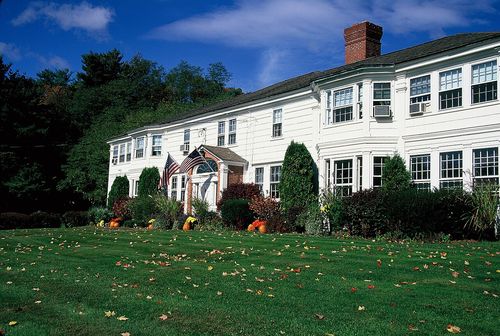
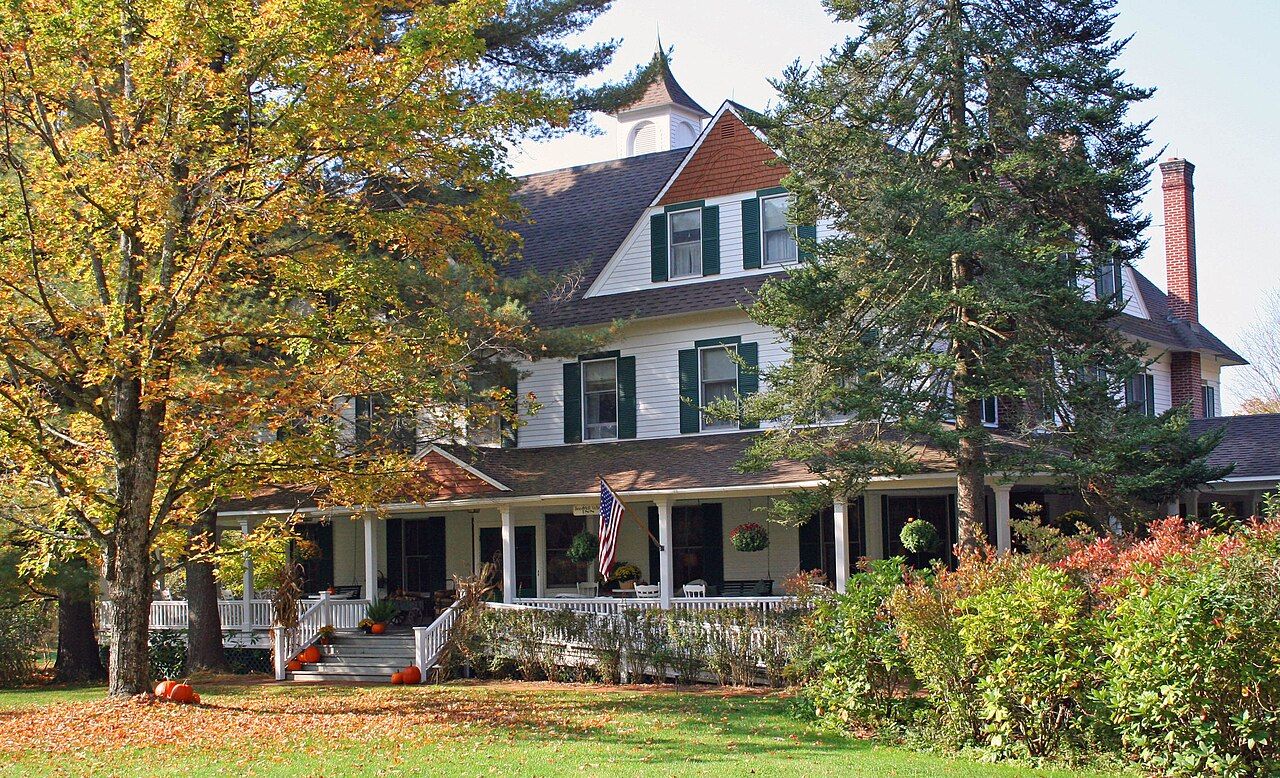
The Bonnie View is an L-shaped, two-story frame building with intersecting gable roofs and large gabled dormers, clapboarded below and finished with decorative shingles in the gable peaks. A cupola with a flared hipped roof and arched louvered vents sits at the center of the roof. A veranda on square pillars with simple capitals wraps the north, east and south sides, rounding the northeast corner, with a porte-cochère on the north; balls on the newel posts are its only ornament. The balanced east front has five bays below, six above. Inside, the two front parlors keep natural oak trim and brick-and-stone fireplaces, and the oak stair its turned spindles. One-story wings for the kitchen, a manager's apartment and a 1983 lounge extend behind.
What to look for
- Cupola with flared roof and arched louvered vents
- Veranda rounding the northeast corner
- Ball-topped newel posts on the porch railing
- The Beaver Kill flowing along the lawn's edge
Setting
The inn sits on a narrow grassy flat at the foot of a wooded hillside in the town of Hardenburgh, at the western edge of Ulster County inside the Catskill Park, north of the hamlet of Lew Beach. The Beaver Kill forms the property's southern and western edges, and the stretch of river within the boundary is itself part of the listing. Beaverkill Road (County Route 54) runs along the opposite bank, and Roscoe, the old fishing center, lies downstream.
Timeline
- 1872Ontario & Western Railroad reaches Roscoe
- 1873Salmo Fontinalis club founded on the upper Beaver Kill
- 1895Bonnie View built by DeWitt Wamsley and the Towses
- 1895–1915Peak years of Catskill dry-fly fishing
- 1983Renovated; lounge wing added; renamed Beaverkill Valley Inn
- 1985Listed on the National Register
Where sources differ
- The nomination does not record when the Bonnie View name was dropped; Wikipedia places the renaming in the early 1980s.