Bed-and-breakfast · Simsbury, Connecticut · Built 1822; enlarged 1890–1900
Simsbury 1820 House
Listed on the National Register as Amos Eno House
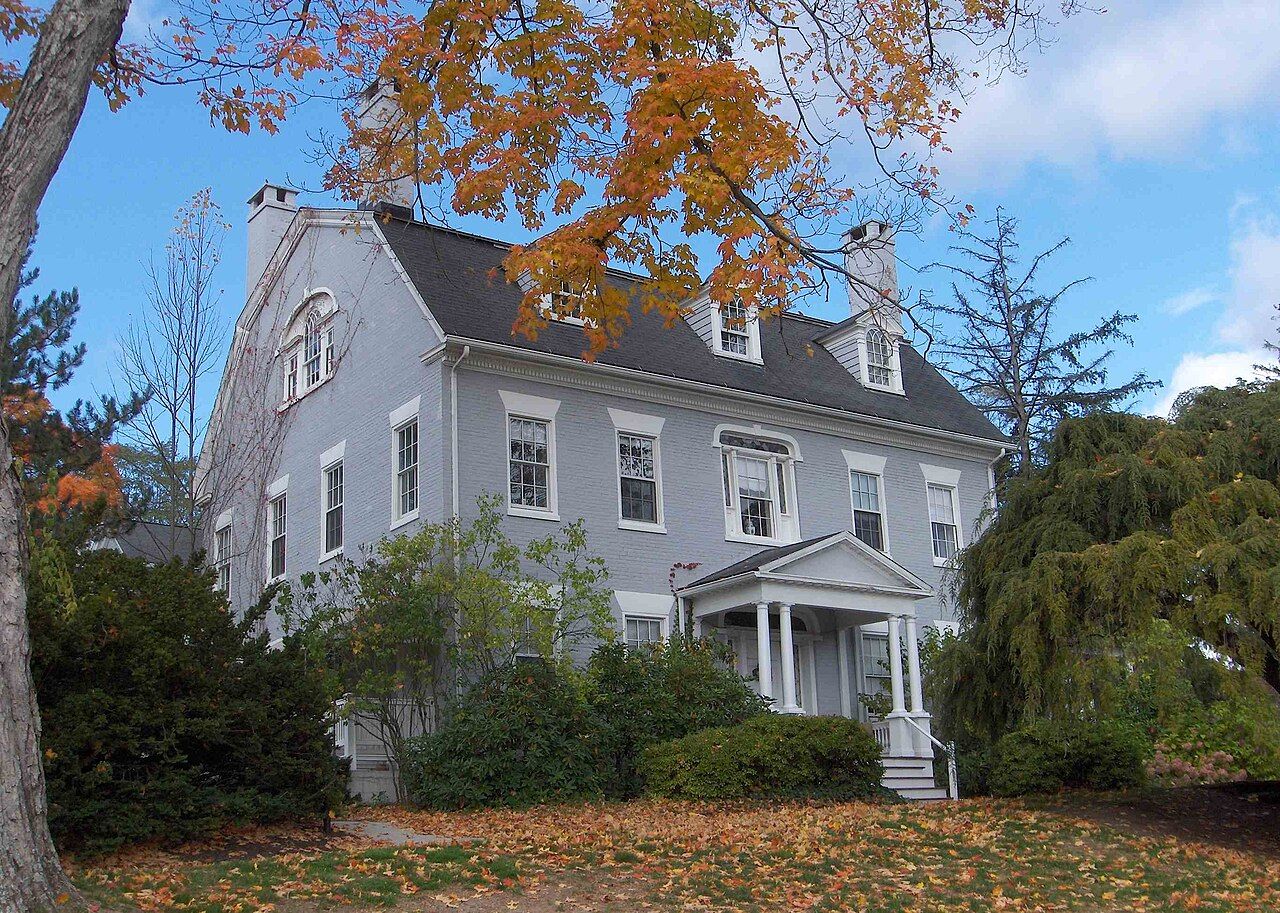
A brick center-hall house of 1822 on Simsbury's main street, enlarged by the merchant Amos R. Eno and later his daughter; the conservationist Gifford Pinchot was born here in 1865.
History
Elisha Phelps, a Yale-trained lawyer who served as Speaker of the Connecticut House and later as state comptroller, cleared an older dwelling from a ten-acre parcel left to him by his father, General Noah Phelps, and put up the present brick house in 1822. When Phelps died in 1847 the property passed to his two sons-in-law. One of them was Amos Richards Eno, a Simsbury-born dry goods clerk who had moved to New York, built a fortune in Manhattan real estate and erected the Fifth Avenue Hotel at Madison Square around 1859. Eno bought out his co-heir in 1875 and used the house as a summer home for roughly half a century.
The family's summers produced the building's best-known event. Eno's grandson Gifford Pinchot was born here on August 11, 1865, and spent his first seven summers on the place; he went on to head the new U.S. Forest Service in 1905 and to serve as governor of Pennsylvania. The nomination ties the listing chiefly to Pinchot, noting that the adjoining Belden Forest was once part of the Eno estate. After a family financial scandal in the 1880s, Eno spent his last years in Simsbury and enlarged the house to hold visiting relatives; he died in 1898.
His daughter Antoinette Eno Wood stayed on, renamed the place Eaglewood, and in 1903 paid the Olmsted landscape office for a plan for the grounds. She made it a center of Simsbury summer society and opened the house to a meeting of Connecticut suffragists. In the twentieth century the house served as a boarding house and a restaurant. The Town of Simsbury bought it in 1960, and a thorough restoration in 1985 prepared it for its later use as an inn and reception house.
“He built the Fifth Avenue Hotel in New York City soon after 1859 in a location many thought to be too far uptown to be practical.”
Architecture
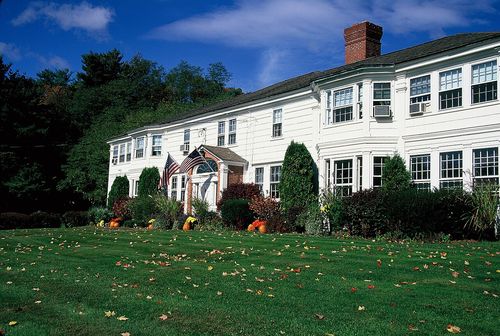
The original block is a two-story, center-hall brick house laid in Flemish bond, with chimneys paired at each gable end. A pedimented porch on Doric columns shelters a doorway framed by sidelights and a fanlight, and the cornice, window architraves and several mantels show the delicate Adam-influenced detail of the 1820s. The enclosed 1822 staircase survives at the back of the front hall; a second, open stair was added later in the northwest corner.
The Eno years changed the silhouette. Verandas went along the front and sides in 1890, and about 1900 the gable roof gave way to a gambrel with dormers, while a large rear ell turned the plan into an irregular T. The nomination calls the result a late Georgian house reworked in a compatible classical idiom.
What to look for
- Flemish-bond brickwork on the 1822 block
- Fanlit main doorway under a pedimented Doric porch
- Gambrel roof and dormers added about 1900
- Wraparound verandas of 1890
- Tree screen along Hopmeadow Street from the Olmsted-era landscape
Setting
The house stands back from Hopmeadow Street (Route 10), the north–south road through Simsbury village, on a rise screened by mature trees. The planting along the road, which partly frames and partly hides the house from traffic, descends from the 1903 Olmsted plan. Simsbury's town center, Eno Memorial Hall and the Phelps Tavern Museum lie a short walk south.
Timeline
- 1822Elisha Phelps builds the brick house on his father's land
- 1865Gifford Pinchot born in the house on August 11
- 1875Amos R. Eno acquires full title
- 1890–1900Verandas, gambrel roof and rear ell added
- 1903Olmsted office plans the grounds for Antoinette Eno Wood
- 1960Town of Simsbury buys the property
- 1985Extensive restoration inside and out
Where sources differ
- The house is marketed as the "1820 House", but the nomination and Wikipedia both give 1822 as the construction date.
- The nomination says Frederick Law Olmsted was commissioned in 1903; Olmsted had retired by then, so the plan came from his successor firm. The client is named on the form as "Mrs. G.B. Woods", which appears to be Antoinette Eno Wood.
- The exact year the building first took overnight guests as an inn is not given in the sources.