Inn · Lansing (South Lansing), New York · Built 1830–1842
Rogues' Harbor Inn
Listed on the National Register as Rogues Harbor Inn
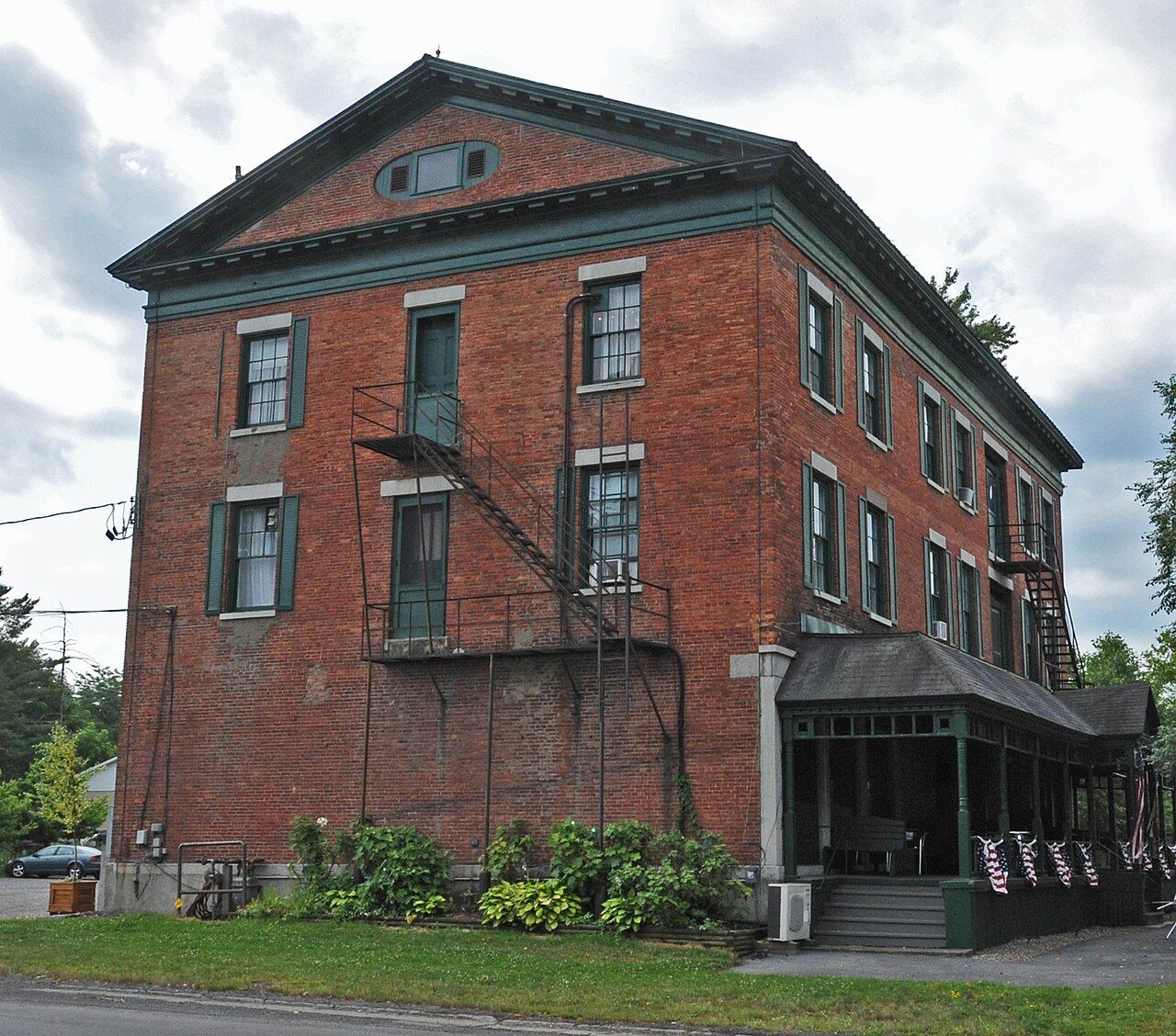
A three-story brick Greek Revival stage hotel built 1830–42 by General Daniel D. Minier at the fork of the Ithaca–Auburn and Cayuga roads in South Lansing; called the Central Exchange Hotel until about 1900.
History
Abram Minier came from Pennsylvania in 1793 to farm Military Tract lot 87, bought from the Revolutionary officer Nicholas Van Rensselaer, at the spot where the road north from Ithaca split toward Auburn and toward the foot of Cayuga Lake, following the old Cayuga Warriors' Trail. His son, General Daniel D. Minier, later town supervisor, began a large brick hotel there in 1830, reportedly at a cost of $40,000, with a bar, dining room and store below and guest rooms and a ballroom above. Brothers-in-law Lemuel Kelsey and Nelson Morgan did the building. An 1836 Ithaca newspaper was already advertising the "spacious, new brick House," though work was not finished until 1842. Minier named it the Central Exchange because coaches changed horses where the two stage lines diverged. He died in 1849.
Harvey and Hannah Platts kept the hotel from 1851, and Henry Miller and his son William from 1860. The Millers took down the wrought-iron balconies, planted the elms out front and renamed it the Elm Grove Hotel. In 1902 Sarah McIntyre and Elizabeth Hubbell made Rogues Harbor the official name; local lore traces it to a drunken patron who smashed a bottle against the wall and toasted "a harbor of rogues." The inn then gained a stop on an interurban electric line and a railroad spur of its own. Auctioned in 1917, it stood empty until Louie Blancher reopened it as a restaurant and bar in 1931. A 1957 remodeling turned up a hidden liquor tank behind a wall panel.
“As South Lansing never developed into a destination in and of itself, the former Central Exchange Hotel represents the expectation, if not the reality, that the turnpike system would continue to be the favored mode of transportation through the region.”
Architecture
The inn is an 80-by-40-foot block of red-orange brick in common bond on a stuccoed fieldstone base, three stories under a standing-seam metal gable roof. Pedimented gable ends hold oval attic windows, and tooled limestone forms every sill and lintel; a wide frieze with dentil molding runs around the eaves. Patched brick and upper-story doors on the north and west fronts show where iron balconies once wrapped the building. Inside, a curved open-stringer stair with scroll-carved tread ends climbs from the center hall to the attic, guest rooms keep their original wood mantels under early-twentieth-century pressed-metal ceilings, and the third-floor ballroom has a vaulted plaster ceiling and a reportedly sprung floor. The front porch is a late-twentieth-century copy of a Victorian one.
What to look for
- Oval windows in the pedimented gable ends
- Patched brick and upper doors where the iron balconies hung
- Tooled limestone lintels and sills
- Limestone storefront at the pub end of the west front
- Small frame former ticket office next door
Setting
The inn stands at the southeast corner of the T-junction of New York Routes 34 and 34B, the heart of the small hamlet of South Lansing, about eight miles north of Ithaca on the high ground east of Cayuga Lake. A few houses and small commercial buildings make up the crossroads, with farms and woodlots beyond. Just south is a small frame building thought to have been the ticket office for the inn's rail spur.
Timeline
- 1793Abram Minier settles on Military Tract lot 87
- 1830Gen. Daniel D. Minier begins the Central Exchange Hotel
- 1836Hotel advertised as open
- 1842Building completed
- 1902Renamed Rogues Harbor
- 1917–1931Building stands vacant
- 2009Listed on the National Register
Where sources differ
- Secondary sources claim the inn once had full-height columns across the front; the nomination found no photograph or document to support this.
- The bottle-throwing origin of the Rogues Harbor name, and a story of counterfeit money found in the attic, are local lore.
- Wikipedia places builder Nelson Morgan in Lansing; the nomination says Ithaca.