Resort hotel · Cashiers, North Carolina · Built 1932–1933 (inn); cottages c. 1890–1941
High Hampton Inn
Listed on the National Register as High Hampton Inn Historic District
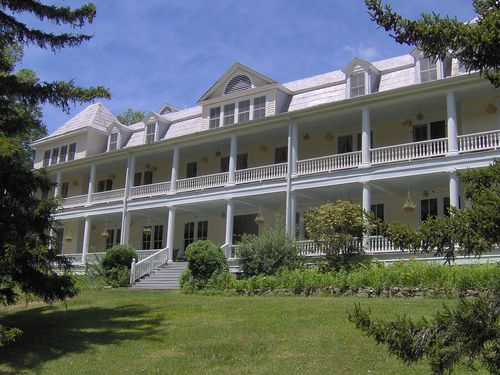
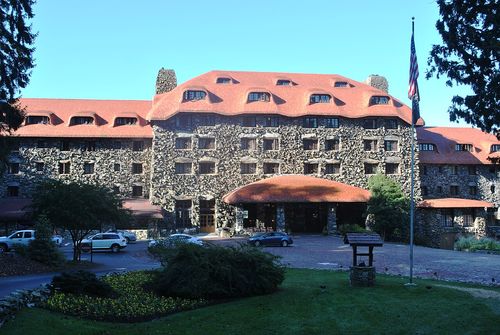
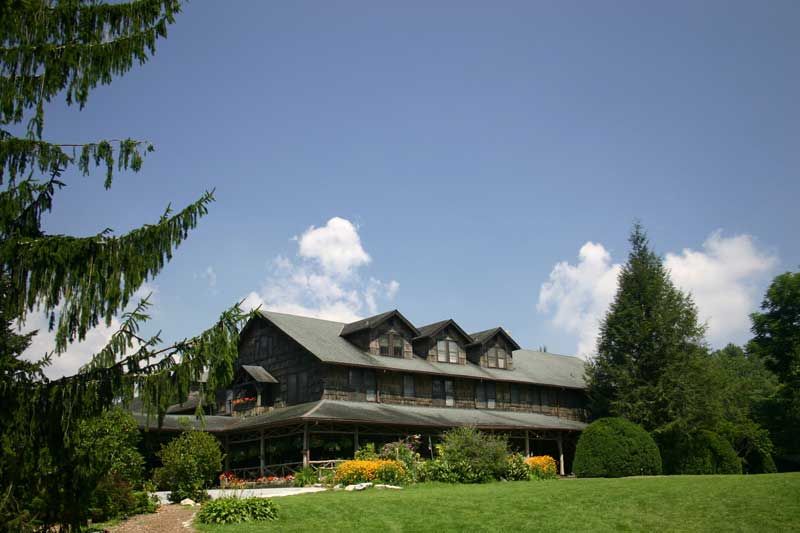
A chestnut-bark-shingled mountain inn of 1932–33 in the Cashiers Valley, built by Erle Stillwell after fire took its predecessor, on the former summer estate of the Hampton family and Dr. William Halsted.
History
The Cashiers Valley, at about 3,500 feet and far from any railroad, drew summer families from South Carolina and Georgia long before it had hotels. Wade Hampton II of Columbia kept a summer estate and hunting preserve here, by tradition from the 1830s or 1840s, and his son Wade Hampton III, later a Confederate cavalry general and governor of South Carolina, spent summers in the valley. In 1890 the family sold the 450 acres to a niece, Caroline Hampton, and her husband, Dr. William Stewart Halsted, the Johns Hopkins surgeon who pioneered surgical residency training and introduced rubber gloves in the operating room. The Halsteds named the place High Hampton and enlarged it to some 2,300 acres, summering here until both died in 1922.
That year Ernest Lyndon McKee, a Sylva paperboard manufacturer, bought the estate with his wife Gertrude Dills McKee, who in 1931 became North Carolina's first woman state senator. They joined the Hampton and Halsted houses with a small hotel addition, turned outbuildings into cottages, hired Virginia innkeepers Frank Lewis and his wife to run the place, and had J. Victor East lay out an unusual eleven-hole golf course playable as nine, eleven or eighteen. In May 1932 fire destroyed the inn. Stillwell's plans were ready by September, about thirty local men built the replacement through the Depression winter, and it opened in 1933 with thirty-three guest rooms, deliberately following the lines of the old one. The McKee family ran the resort for 95 years before selling it in 2017.
“Located in the Cashiers Valley of Jackson County, the High Hampton Inn Historic District illustrates the third era of a long history of resort-seekers.”
Architecture
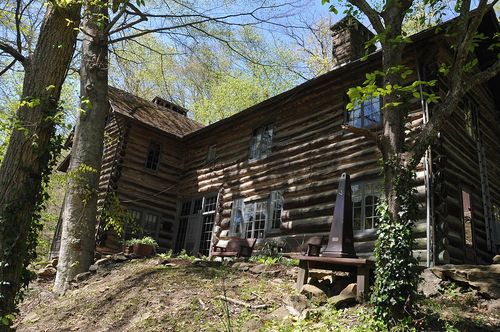
The inn is a two-and-a-half-story, L-shaped building on a stone foundation, sheathed in chestnut-bark shingles. The nomination believed it the oldest bark-shingled inn left in western North Carolina, notable because the chestnut blight soon made the material unobtainable. A hip-roofed porch runs across most of the south front and around to a porte-cochère, carried on stocky bark-covered limbs with a crossed-twig balustrade and frieze. Gables and small balconies carry radiating stickwork. Inside, the 38-by-104-foot lobby is lined in board-and-batten clear chestnut on walls and ceiling, with chestnut-paneled posts around a massive central stone chimney. The surrounding cottages, mostly of 1932–41, share the same bark and board-and-batten finishes.
What to look for
- Chestnut-bark shingle siding
- Porch posts of bark-covered tree limbs with twig railings
- Chestnut board-and-batten lobby around a central stone chimney
- Rock Mountain and Chimney Top cliffs behind the inn
- Wade Hampton smokehouse of about 1890
Setting
The inn stands on a knoll south of Cashiers, reached from N.C. Highway 107 through a low curving stone wall and a boxwood-lined drive. Behind it rise the bare granite faces of Rock Mountain and Chimney Top. Hampton Lake lies to the east and the smaller Jewel Lake below the sloping south lawn; cottages cluster around the inn and the lake's west shore, and the Georgia and South Carolina lines are about six miles away.
Timeline
- 1840sWade Hampton II's summer estate in the Cashiers Valley
- 1890Caroline Hampton and Dr. William Halsted buy the estate
- 1922E. Lyndon and Gertrude McKee buy it and open an inn
- 1932Fire destroys the first inn in May
- 1933Present inn by Erle Stillwell opens
- 1991Listed on the National Register
- 2017McKee family sells the resort
Where sources differ
- When the Hamptons first came to the valley is uncertain; the nomination cites local tradition for the 1830s and dates the resort history to the 1840s.
- Wikipedia dates the golf course to 1924 and the inn's opening after the fire to 1933; the nomination dates the McKee era from 1922.