Architectural style · c. 1890–1940
Tudor Revival
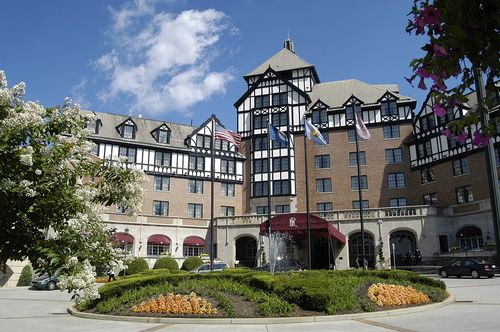
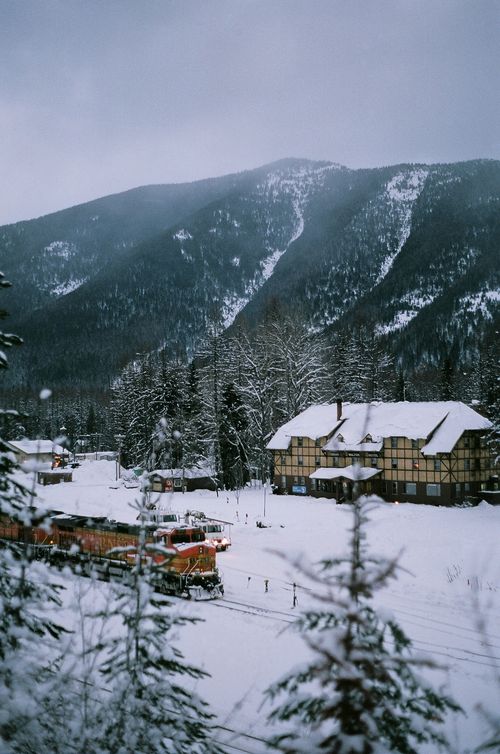
Steep front gables, decorative half-timbering, tall chimneys and windows in groups of small casements.
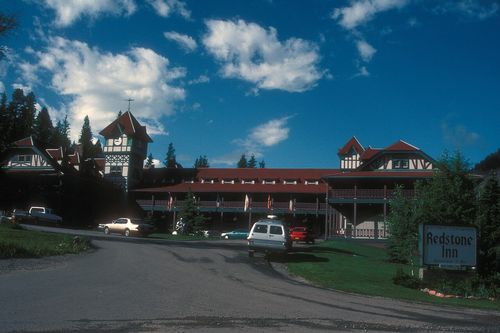
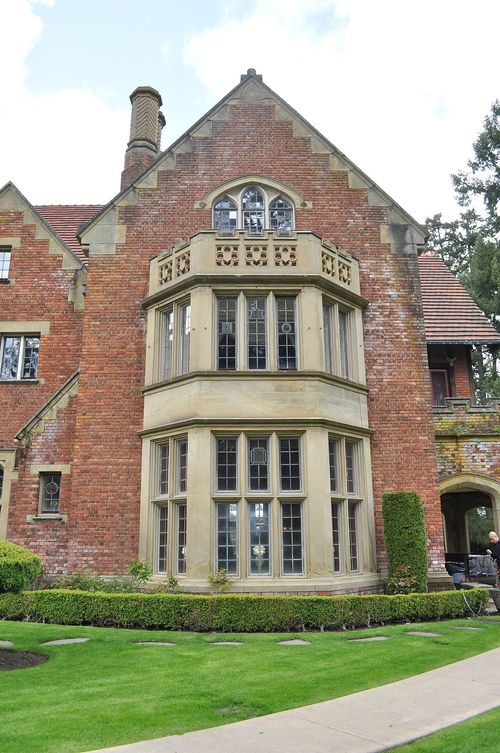
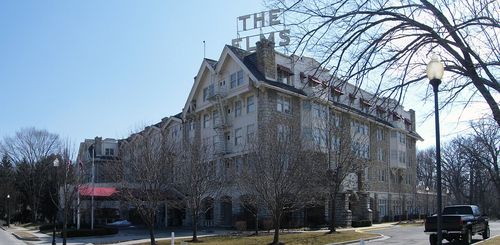
Tudor Revival draws loosely on English late-medieval and Elizabethan houses. Its signatures are steeply pitched, front-facing gables, often overlapping, decorative (not structural) half-timbering filled with stucco or brick, massive chimneys with decorative pots, and tall narrow windows grouped in twos and threes, often with leaded glass.
Large Tudor Revival country houses built for industrial fortunes in the 1900s to 1920s, and some railroad and resort hotels, have since become inns and event venues. On smaller houses the style appears as a steep gable and an arched front door.
Where you'll see it: Suburbs and estates of the Northeast, Midwest and Pacific Northwest.
How to recognize it
- Steep, front-facing gables, often overlapping
- Decorative half-timbering with stucco or brick infill
- Massive chimneys, sometimes with decorative pots
- Groups of tall casement windows with small or leaded panes
- Rounded or flattened (Tudor) arched doorways
- Brick or stone walls on the lower floor