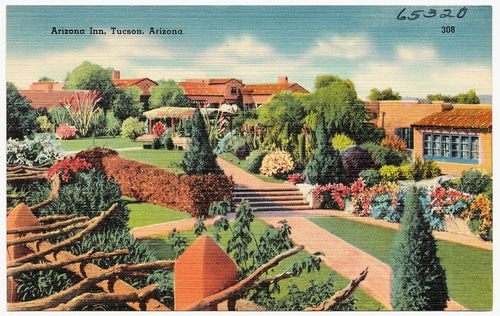
Architectural style · c. 1890–1940
Mission and Spanish Revival
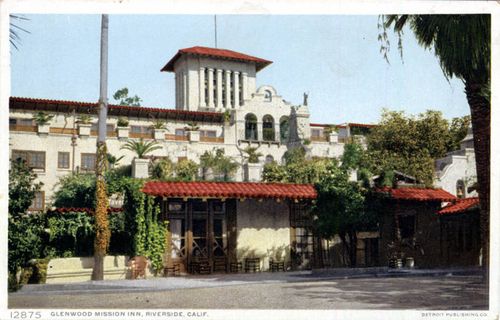
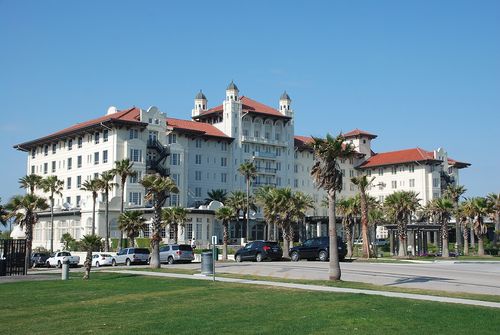
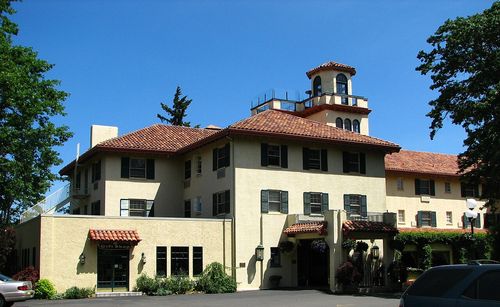
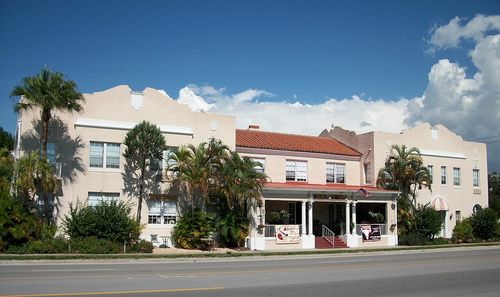
Smooth stucco walls, red tile roofs, arcades and shaped parapets that recall the Spanish missions of California and Mexico.
California architects began reviving the forms of the Franciscan missions in the 1890s, and the Santa Fe and Southern Pacific railroads adopted the look for stations and hotels. Mission Revival uses curved, shaped parapets, plain stucco walls, arcades of round arches, bell towers and red tile roofs.
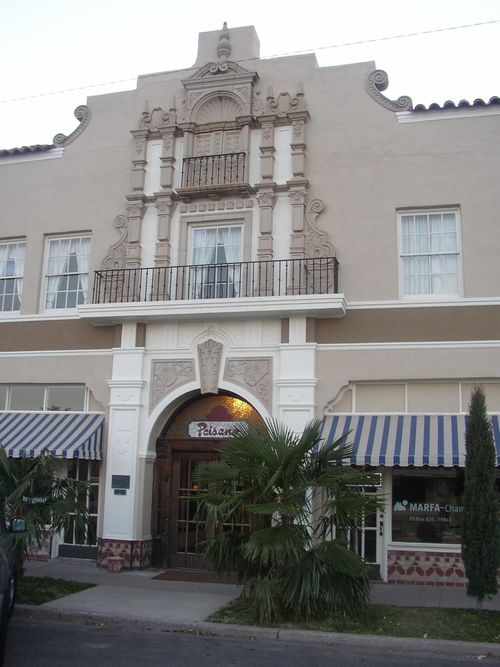
After the 1915 Panama–California Exposition in San Diego, the richer Spanish Colonial Revival took over, with carved ornament, wrought iron, balconies and courtyards. Both spread to Florida and the Gulf Coast as resort styles in the 1920s land boom, and they are behind several of the grandest hotels in California and Florida.
Where you'll see it: California, the Southwest, Florida and Texas.
How to recognize it
- Smooth stucco walls
- Red clay tile roofs, low pitched
- Curved, shaped parapets (Mission)
- Arcades of round arches; courtyards and loggias
- Bell towers or domed towers
- Wrought-iron balconies and carved ornament (Spanish Colonial)