Hotel · Greenville, Florida · Built 1902
Grace Manor Inn (Bishop-Andrews Hotel)
Listed on the National Register as Bishop-Andrews Hotel
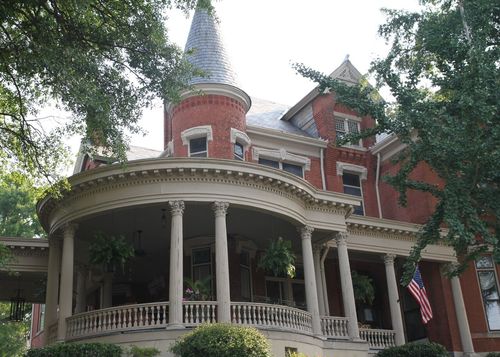
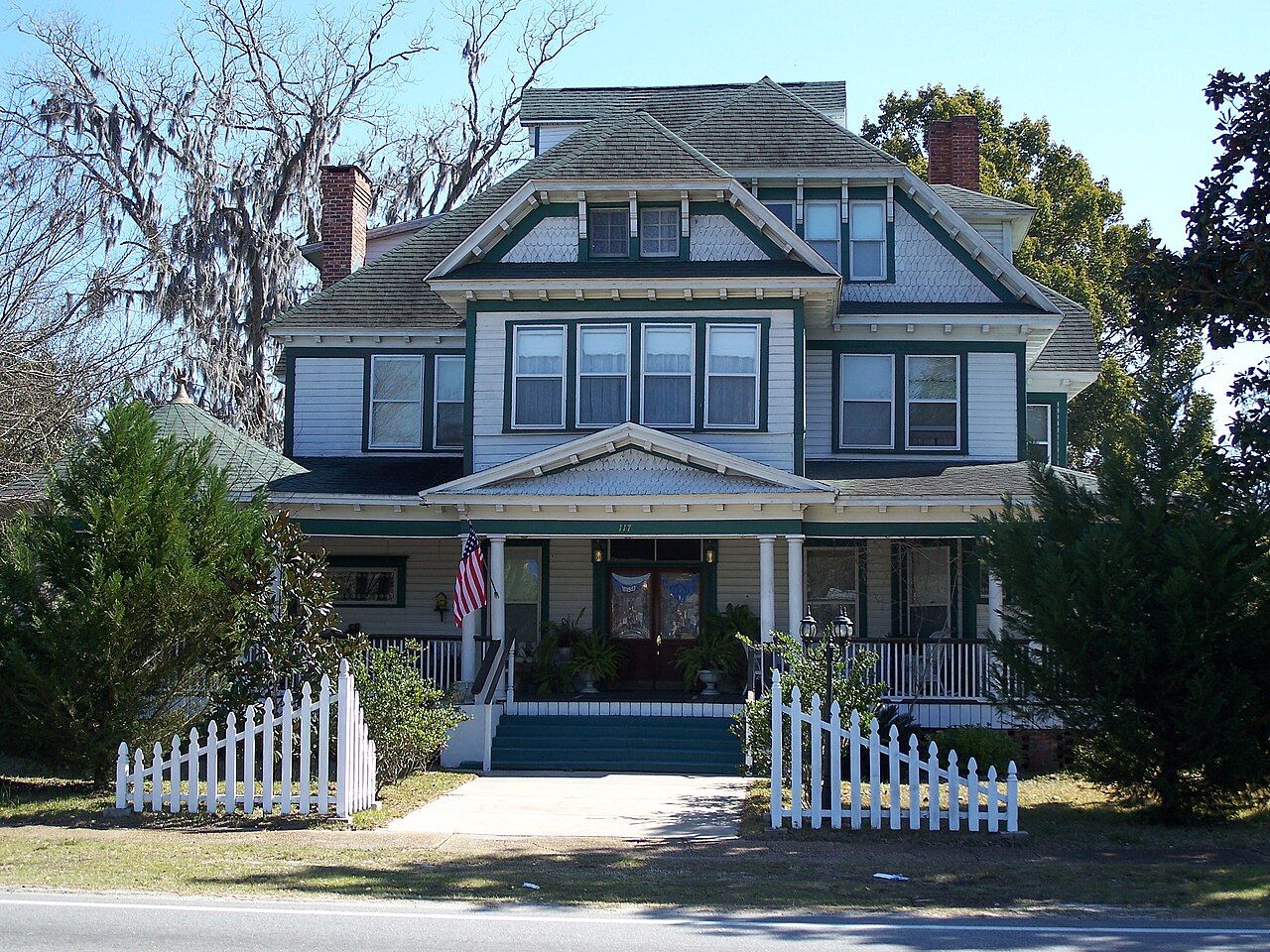
A three-story Queen Anne railroad hotel of 1902 in the Panhandle mill town of Greenville, with a wraparound Doric porch and a round conical-roofed corner, later converted to a bed-and-breakfast.
History
Greenville, first called Sandy Ford, grew after the Civil War into a sawmill and trading town on the Pensacola and Georgia Railroad, and in 1901 the South Georgia Railway arrived from Quitman with the backing of the town's leading landowner, Elijah Hays. The next year Jesse W. Bishop, a farmer and businessman who also ran a cotton gin and livery and later helped found the Bank of Greenville, built the Bishop Hotel on the site of Hays's old brickyard, a block from the depot, and planted the grounds with pecans, fruit trees and palms. In 1925 he sold it to G. Frank Andrews, later mayor and a state legislator, who ran it as the Andrews Hotel.
Under the Andrews family the hotel served both travelers and townspeople. Teachers from Greenville's schools boarded there in the 1920s, crews building U.S. 90 lodged there around 1930, and the dining room held weddings, meetings, family dinners and teas. Electricity and plumbing came in the late 1920s, and the attic staff rooms became extra boarding rooms; during the Second World War the side porches may have served as sleeping porches. The end of passenger rail service took away its trade, and in 1954 it closed and Andrews sold it to his daughters. Grace Andrews Strupp lived in it until 1987, and it stood empty when it was nominated in 1990. It later reopened as the Grace Manor Inn, a bed-and-breakfast named, it appears, for her.
“There were several schools in Greenville during the mid-twenties, and many of the teachers boarded there.”
Architecture
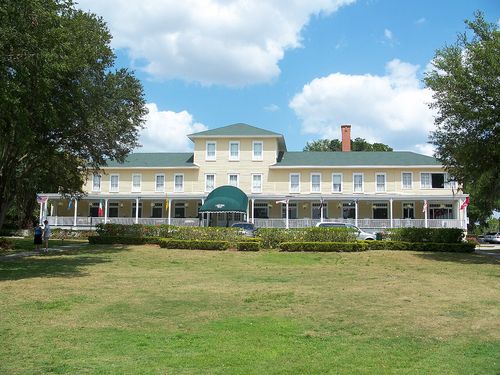
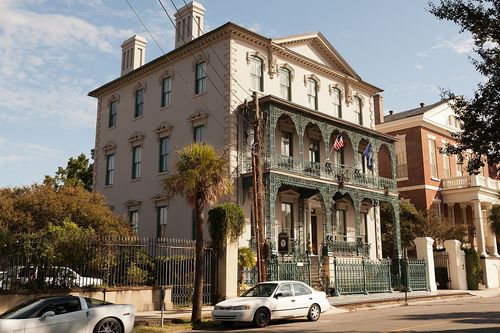
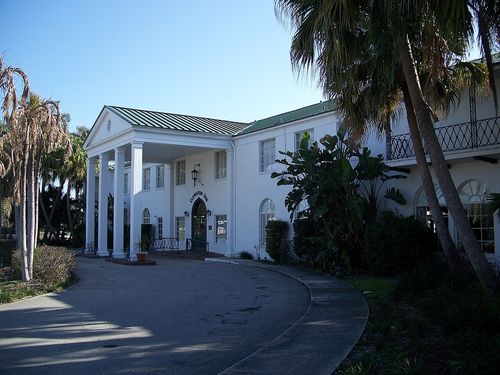
The hotel is a square, three-story frame building on brick piers, under a complex roof of a jerkinhead hip, clipped cross gables and assorted dormers, with exposed rafter ends and four brick chimneys, two of them corbeled. Drop siding covers the walls, with diamond, fishscale and staggered shingles in the gables. A porch on six pairs of Doric columns wraps the front and half of each side; triple columns carry a shingled pediment at the entrance, and a round element with a conical roof and iron crocket marks the northwest corner. Stained-glass panels light the first and second floors. Inside, a central hall runs the length of the building, with tongue-and-groove ceilings, classical woodwork and original washbasins in many rooms.
What to look for
- Round corner with a conical roof and iron crocket
- Paired and tripled Doric porch columns
- Fishscale and diamond shingles in the gables
- Stained-glass window panels
- Jerkinhead roof with exposed rafter ends
Setting
The hotel stands at the southeast corner of U.S. 90 and U.S. 221 on Redding Street in Greenville, a small farming community in Madison County, one block from the former railroad station. Around it are modest early-twentieth-century houses and commercial buildings that keep the town's mixed small-town character. U.S. 90, the old main road across the Panhandle, still runs past the front porch.
Timeline
- 1901South Georgia Railway reaches Greenville
- 1902Jesse W. Bishop builds the hotel
- 1925Sold to G. Frank Andrews; renamed the Andrews Hotel
- c. 1930Road crews building U.S. 90 board here
- 1954Hotel closes; sold to Andrews's daughters
- 1990Listed on the National Register
Where sources differ
- Wikipedia gives the address as 117 Redding Street; the nomination gives 109 Redding Street.
- The date of the conversion to the Grace Manor Inn is not given in the sources.