Bed-and-breakfast · West Pointe à la Hache, Louisiana · Built c. 1855; tenant house c. 1890
Woodland Plantation
A raised frame plantation house of about 1855 facing the Mississippi below New Orleans, with an overseer's house and tenant cabin, on a sugar estate worked by enslaved people; restored as a country inn after 1997.
History
Plaquemines Parish, stretching down the Mississippi below New Orleans toward the Gulf, was mostly swamp and open water, but its strips of high ground along the river grew sugarcane, and in 1860 the parish had thirty-one slaveholdings of fifty or more people. Woodland was settled in the mid-1830s by William Johnson, a river pilot, and worked by enslaved laborers who lived in two-story brick quarters, unusual in Louisiana; they stood until Hurricane Betsy destroyed them in 1965. Johnson's son George managed the plantation until 1856, when another son, Bradish Johnson, took over. The present main house, long dated to the 1830s, shows by its details that it is a building of the 1850s.
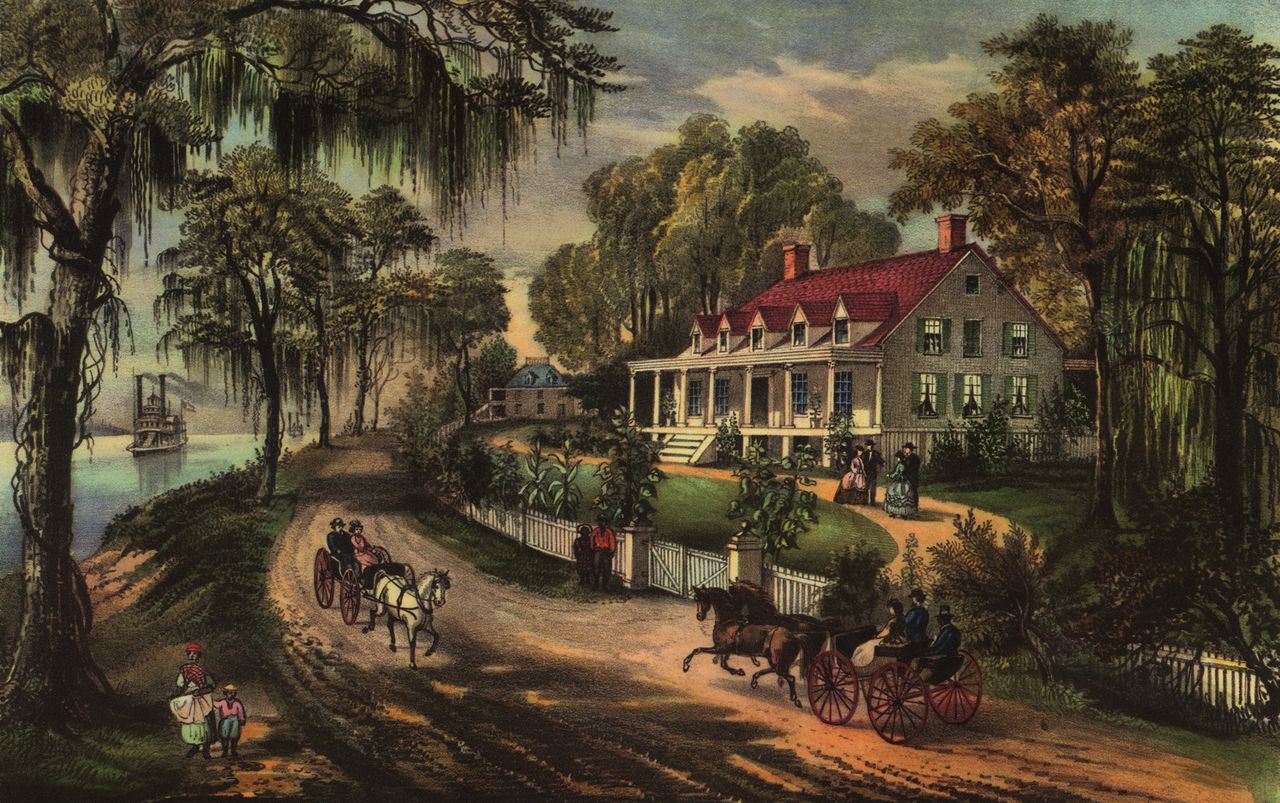
Bradish Johnson divided his time between the plantation and New York and sided with the Union in the Civil War. Afterward he enlarged the estate and restored production, and an 1871 article in Every Saturday described Woodland's sugar house as one of the largest and best equipped in the country, with an illustration of the plantation. Wikipedia reports that a related print, A Home on the Mississippi, later supplied the image on the Southern Comfort label. In the early twentieth century the Wilkinson family bought Woodland and kept it until 1997, when new owners began a tax-credit restoration to make it a country inn. It was listed on the National Register in 1998, the same year a historic Catholic church was moved onto the grounds.
“It is believed by the SHPO to be the only surviving example of the Greek Revival style and one of only two examples of the Italianate taste in Plaquemines Parish.”
Architecture
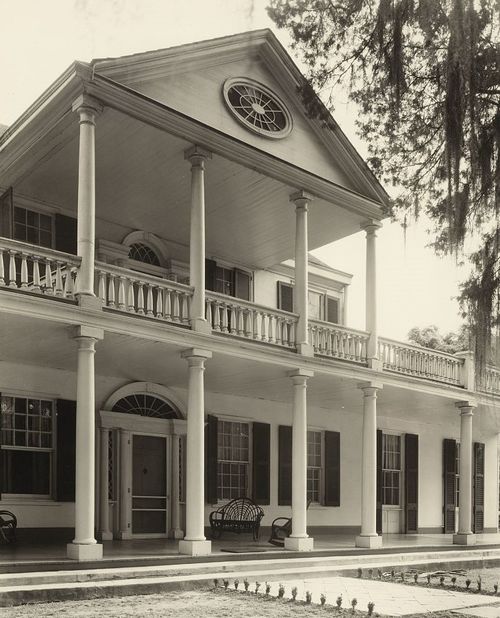
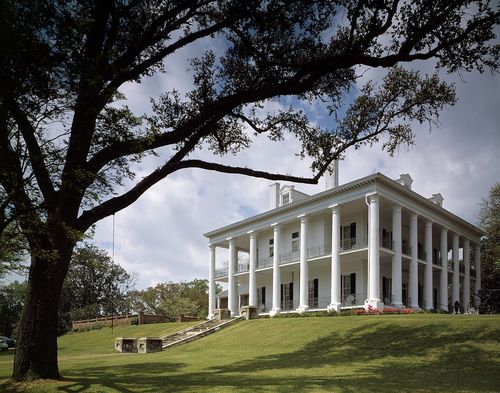
The main house is a clapboarded frame building raised on brick piers, with a gabled roof carrying five pedimented dormers front and back, and galleries on both long sides with seven wooden columns each. Historic photographs show paired Italianate brackets and a cast-iron gallery railing in a shell pattern, which the restoration planned to replicate. Off-center entrances, a Creole holdover, have Gothic-arched door panels, sidelights and transoms. Inside, Greek Revival eared surrounds frame doors and windows, a parlor runs the full depth of the house, and a mahogany stair with turned spindles curves up from a tight stair hall. Upriver stands a hip-roofed overseer's house, one of few documented in Louisiana, and a two-room tenant cabin of about 1890.
What to look for
- Five pedimented dormers on each slope of the roof
- Gothic-arched panels on the front and rear doors
- Greek Revival eared door and window surrounds
- The raised overseer's house upriver
- Ruins of the sugar house
Setting
Woodland faces the Mississippi across the levee on Louisiana Highway 23 in West Pointe à la Hache, about an hour south of New Orleans, with no road between the house and the river. Flat cane and citrus land and coastal marsh surround the 55-acre property, where the foundation ruins of the sugar house remain visible.
Timeline
- c. 1835William Johnson settles Woodland
- c. 1855Present main house built
- 1856Bradish Johnson takes over management
- 1871Every Saturday describes and illustrates the plantation
- 1965Hurricane Betsy destroys the brick slave quarters
- 1997Wilkinson family sells; restoration as an inn begins
- 1998Listed on the National Register on June 18
Where sources differ
- The house is often dated to the 1830s; the nomination argues from its details that it was built in the 1850s.
- The connection between Woodland and the Southern Comfort label art comes from Wikipedia and is not in the nomination.
- The year the inn first took overnight guests is not given in the sources.