Architectural style · c. 1855–1885
Second Empire
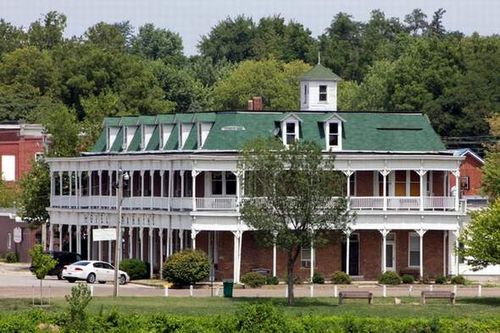
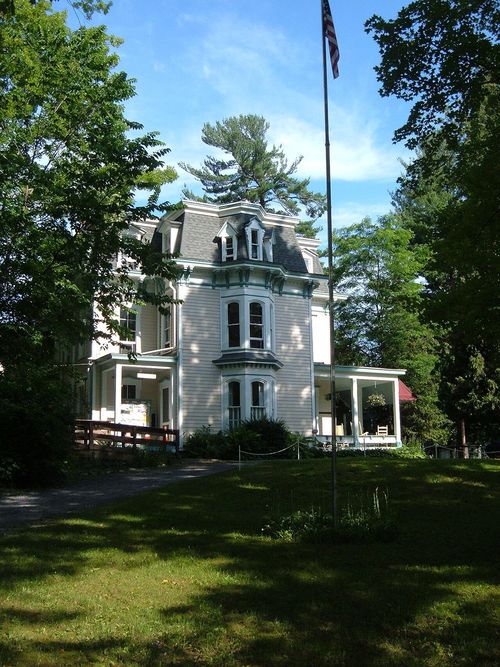
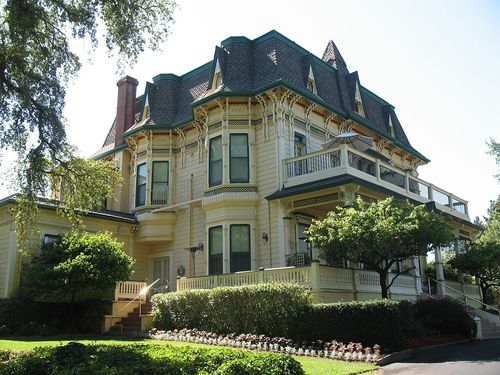
The mansard roof: a steep, double-pitched roof that holds a full top floor, punctuated by dormers and often a central tower.
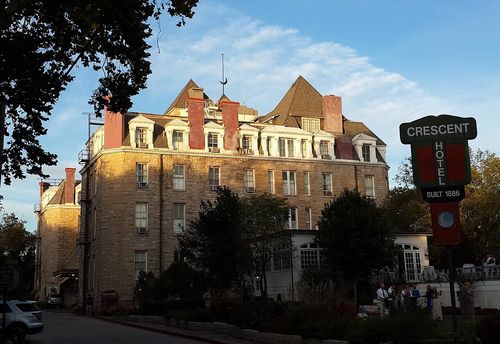
Named after the French Second Empire of Napoleon III, whose rebuilding of Paris popularized the mansard roof, the style crossed to America in the 1850s and was used for everything from post offices to resort hotels in the 1860s and 1870s. The mansard (named after the 17th-century architect François Mansart) has a near-vertical lower slope and a flat or shallow upper one, which gave builders an extra usable floor.
Below the roof, the details are much like Italianate: brackets, tall windows with heavy hoods, bay windows. Many hotels and grand houses of the Gilded Age added a mansard floor and a square tower; the roof itself is often laid in patterned slate in bands of color.
Where you'll see it: Northeast and Midwest cities and resorts; county courthouses and public buildings of the 1870s.
How to recognize it
- Mansard roof with a steep lower slope
- Dormer windows in the roof, often with arched or pedimented hoods
- Patterned or multi-colored slate roofing
- Central or corner tower with its own mansard
- Bracketed cornice under the roof
- Tall windows with molded hoods