Architectural style · c. 1870–1900
Romanesque Revival
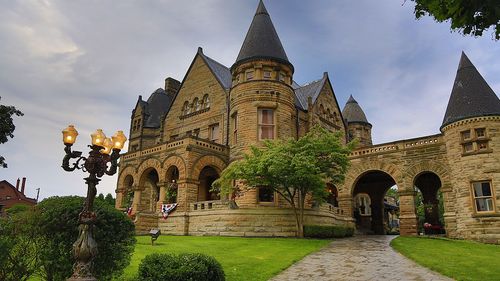
Weighty masonry, deep round arches and squat towers, usually in rough-faced stone; the Richardsonian version is the best known.
Henry Hobson Richardson's Trinity Church in Boston (1877) made round-arched, heavily massed stone building the fashion for libraries, courthouses, railroad stations and mansions across the country. Richardsonian Romanesque uses rock-faced stone (often in contrasting colors), wide round arches set deep into the wall, short thick columns, and towers with conical or pyramidal roofs.
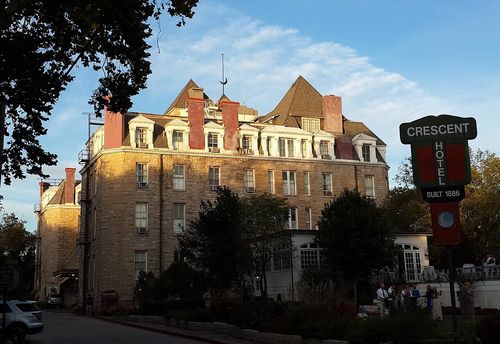
It is costly to build, so it appears most often on public buildings and on the houses of wealthy industrialists, several of which have since become inns. Look for arches springing from low piers and for windows grouped in rows beneath them.
Where you'll see it: Cities and industrial towns of the Northeast and Midwest; county courthouses nationwide.
How to recognize it
- Rock-faced (rusticated) stone walls
- Wide, deep round arches over doors and windows
- Squat towers with conical or pyramidal roofs
- Short, thick columns and carved foliage capitals
- Windows grouped in bands under arches
- Contrasting stone colors in trim